Seamless Stainless Steel TP317 Tube
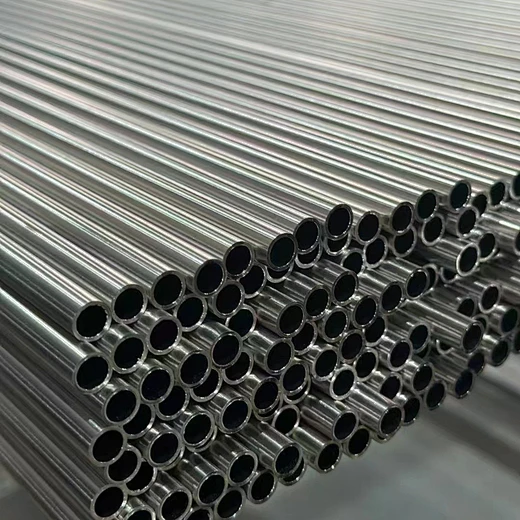
Distinguished by its increased Molybdenum (3.0% min) content, our TP317 tubing offers enhanced mechanical properties and superior corrosion resistance compared to standard 316 grades, particularly in acidic chloride environments. These tubes maintain a typical tensile strength of 570 MPa and remain essentially non-magnetic, making them indispensable for mission-critical applications in chemical processing, pulp and paper manufacturing, and aerospace systems. Finished by cold drawing and precise solution annealing at our parent mill, GZH verifies optimal microstructure and long-term durability for demanding industrial media.
PREN ≈ 28-30 ,higher than TP316L PREN 24-25
Send your specification — grade, OD × wall thickness, standard, quantity. Firm quotation within 24 hours; MOQ from 1 piece; EN 10204 3.1 MTC.
TP317 (UNS S31700 / 1.4449) Seamless Stainless Steel Tube
TP317 is a 18Cr-12Ni-3.5Mo austenitic grade with higher molybdenum than 316, giving improved resistance to pitting and crevice corrosion in chloride and sulfur-bearing media.
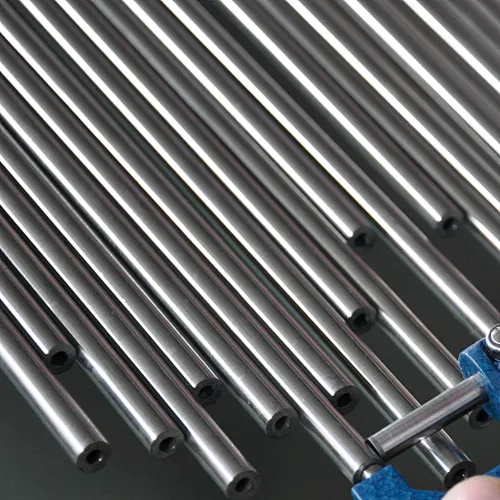
GZH supplies TP317 seamless tube in 6 – 1016 mm OD and SCH 5S – XXS (1 – 50 mm) wall, solution annealed, pickled or bright annealed, with EN 10204 3.1 certificates as standard and 3.2 on request.
Key specifications
| Grade | TP317 / UNS S31700 / EN 1.4449 / 06Cr18Ni11Mo3 (S31708) |
| Product standard | ASTM A213 (seamless); ASTM A312 for pipe on request |
| Process | Seamless — hot extrusion / hot piercing, cold drawn or cold pilgered finishing |
| Outer diameter | 6 – 1016 mm |
| Wall thickness | SCH 5S – XXS (1 – 50 mm) |
| Length | Random, double random, cut to length up to 18 m |
| Ends | Plain, beveled |
| Delivery condition | Solution annealed, pickled or bright annealed |
| Certificate | EN 10204 3.1 (3.2 on request — ABS, DNV, LR, BV, TÜV) |
Chemical composition, % (per ASTM A312)
| C | Mn | Si | P | S | Cr | Ni | Mo |
|---|---|---|---|---|---|---|---|
| ≤ 0.08 | ≤ 2.00 | ≤ 1.00 | ≤ 0.045 | ≤ 0.030 | 18.0 – 20.0 | 11.0 – 15.0 | 3.00 – 4.00 |
Mechanical and physical properties
| Tensile strength, room temperature | ≥ 515 MPa | ASTM A312 minimum |
| Yield strength (0.2% offset) | ≥ 205 MPa | ASTM A312 minimum |
| Elongation in 2 in. or 50 mm | ≥ 35% | ASTM A312 minimum |
| Hardness | ≤ 95 HRB (typical) | Published typical value |
| Density | 7.9 g/cm³ | Published typical value |
| Melting range | ≈ 1400 – 1450 °C | Published typical value |
| Thermal expansion, 20 – 100 °C | ≈ 16.0 µm/m·K | Published typical value |
| Heat treatment | 1040 – 1120 °C, water quenched | Standard practice |
TP317 compared with related grades
| Grade | Key alloying | Typical use | Watch out for |
|---|---|---|---|
| TP304 | 18Cr-8Ni | General corrosion, food, water | Chloride SCC above 60 °C |
| TP316L | 16Cr-10Ni-2Mo | Chloride and chemical service | SCC in hot concentrated chlorides |
| TP321 | 18Cr-10Ni-Ti stabilised | Welded high-temperature piping | Lower creep strength than 321H |
When to choose TP317, and when not to
- Chloride and sulfur are both present and 316L shows pitting.
- You need a moderate step up from 316L without jumping to super-austenitics.
- Welded construction requires better as-welded corrosion resistance.
- Seawater or high-chloride service: 904L, 254SMO or duplex are stronger choices.
- Chloride SCC above 60 °C.
- High-temperature creep service.
Typical applications
Mill, stock and incoming inspection
- Every heat comes from our parent mill and arrives with an EN 10204 3.1 certificate stating heat number, chemistry and mechanical results.
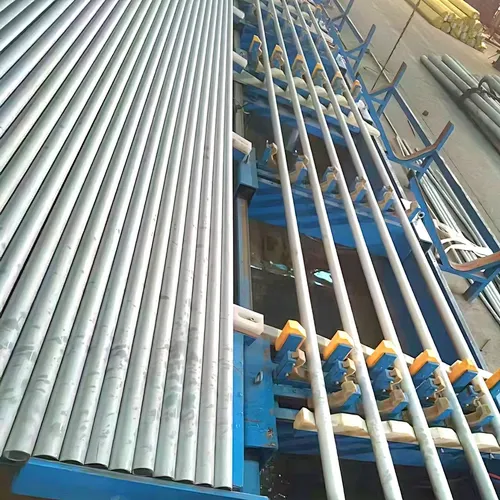
- Mill route, for reference: hot extrusion or hot piercing, then cold drawing or cold pilgering at GZH. Stock we hold is finished to these routes.
- Solution annealed at 1040–1120 °C and water quenched at the mill; pickled or bright annealed to your specification.
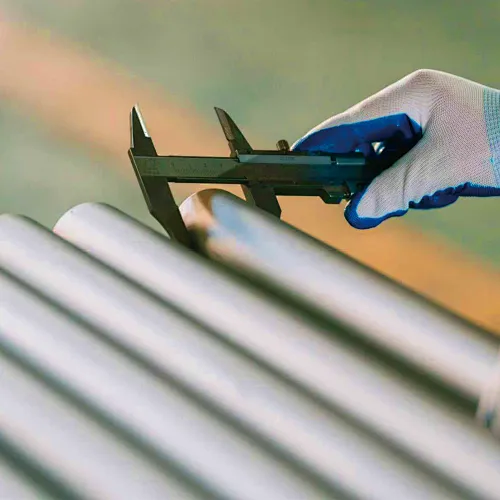
- Mill tests to the standard, plus our own incoming check: PMI/XRF grade verification, dimensions, ovality and surface. Third-party inspection by SGS, BV, TÜV or your nominated agency on request.
Certificates
Every shipment includes an EN 10204 3.1 mill test certificate with heat number, chemistry, mechanical results and test reports. EN 10204 3.2 is available through your nominated inspection agency.
Packing and delivery
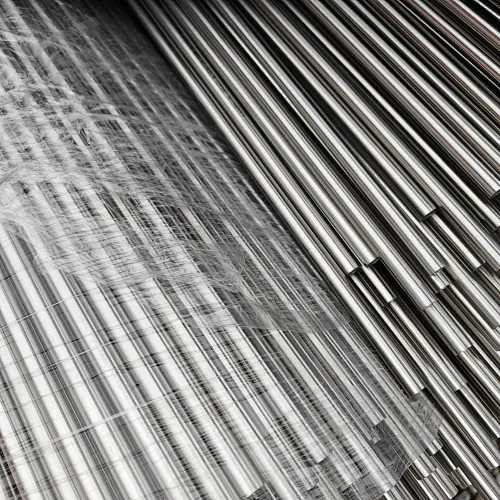
Tubes are end-capped, bundled and packed in plywood cases or steel frames for sea freight. Loading port: Shanghai / Ningbo or as requested. Contact us for current lead time and stock sizes.
How to request a quote
Send us: outer diameter, wall thickness or schedule, length, quantity, standard and certificate level, delivery condition, destination port. We reply within 24 hours.
Contact:supply@xtd-ss.com · +86-577-88989817